Space Mission Studio
A 3D simulator of real space missions, from the Space Shuttle to the Moon and Mars. Pick one of 16 missions, such as STS-135, Apollo 11, Perseverance, or Chang'e 5, and watch the whole voyage, from the countdown on the pad to the landing, with the numbers behind every moment on screen.
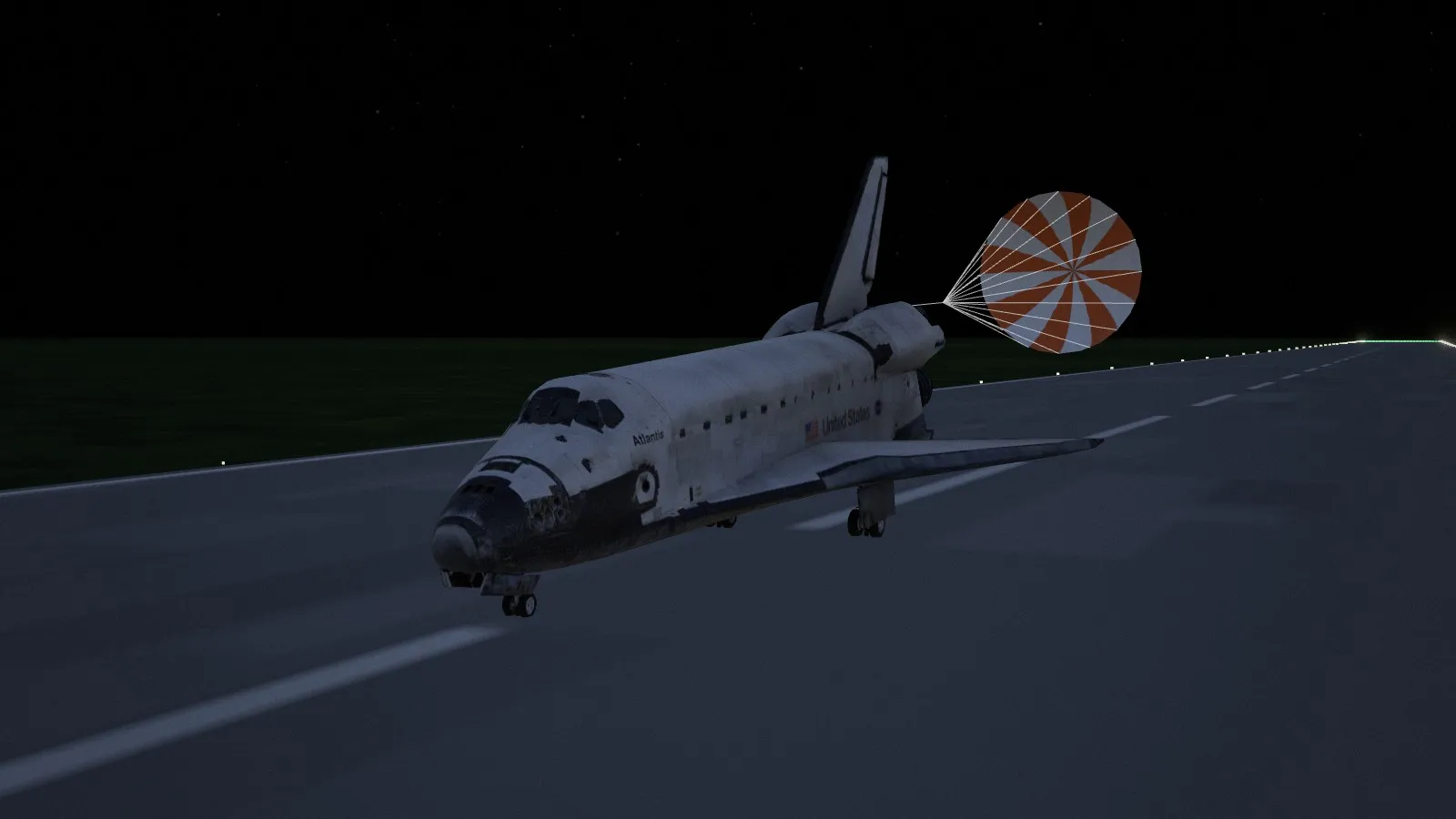
At 5:57 a.m. EDT on July 21, 2011, Atlantis came to a stop on the runway at Kennedy Space Center. It was STS-135, the 135th and final Space Shuttle flight. Over 13 days Atlantis had flown more than five million miles, and it came down the last stretch gliding, with no engines.
The first flight, STS-1, had launched on April 12, 1981. In the 30 years since, the five orbiters had flown more than 542 million miles and carried 355 people from 16 countries, 852 times in all. In Mission Studio you can fly the first and the last of them, STS-1 and STS-135, again.
How does a 100-tonne orbiter like Atlantis, with no engines to help, find a runway from half a world away? Why does a rocket lean over within seconds of clearing the tower at launch? Missions to the Moon and Mars bring more questions. How does a spacecraft get from a launch pad to the Moon? How long does the engine actually fire on the way to Mars, and what is the spacecraft doing for the other seven months? Mission Studio was made for storyboarding a film about the solar system, and a storyboard has to answer exactly these questions: where the spacecraft really is, which way it points, and whether its engines are firing.
So Mission Studio computes the flights itself. When you press Fly this mission, a flight planner in a Web Worker solves the whole mission from physics. The ascent is integrated stage by stage from each launch vehicle’s real thrust, specific impulse, and mass. Flights between Earth and the Moon are integrated in the combined pull of the Earth, the Moon, and the Sun. Trips to the planets are joined from planet-centred hyperbolas and arcs around the Sun, with flybys aimed through the B-plane. Space Shuttle flights add Earth’s oblateness to every orbit, phasing burns timed to the real docking, and an entry that steers by banking, with roll reversals, toward the runway. The planets follow JPL’s approximate orbital elements, the Moon follows Meeus’s lunar theory, and the stars come from a real star catalogue.
What you can see
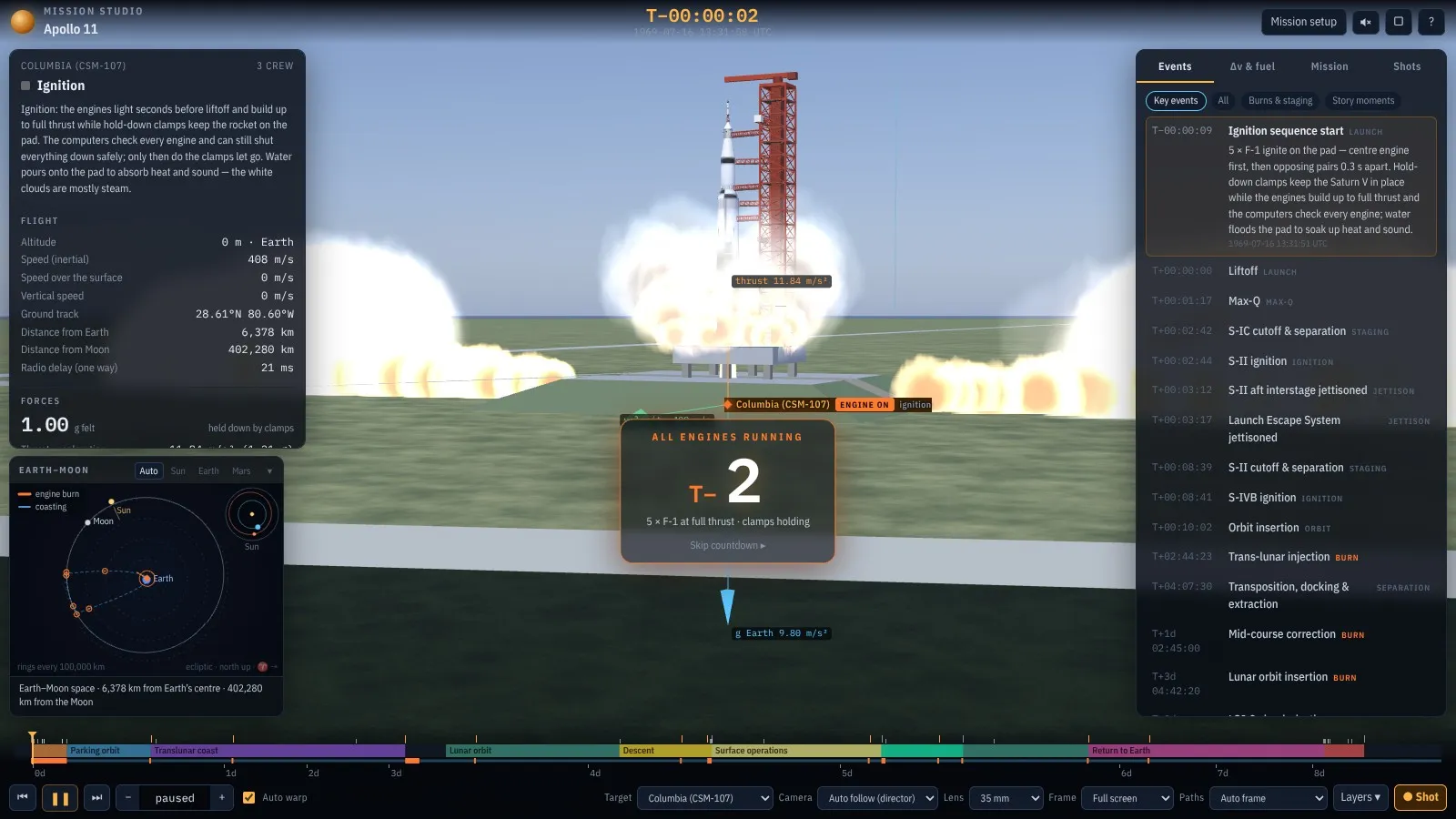
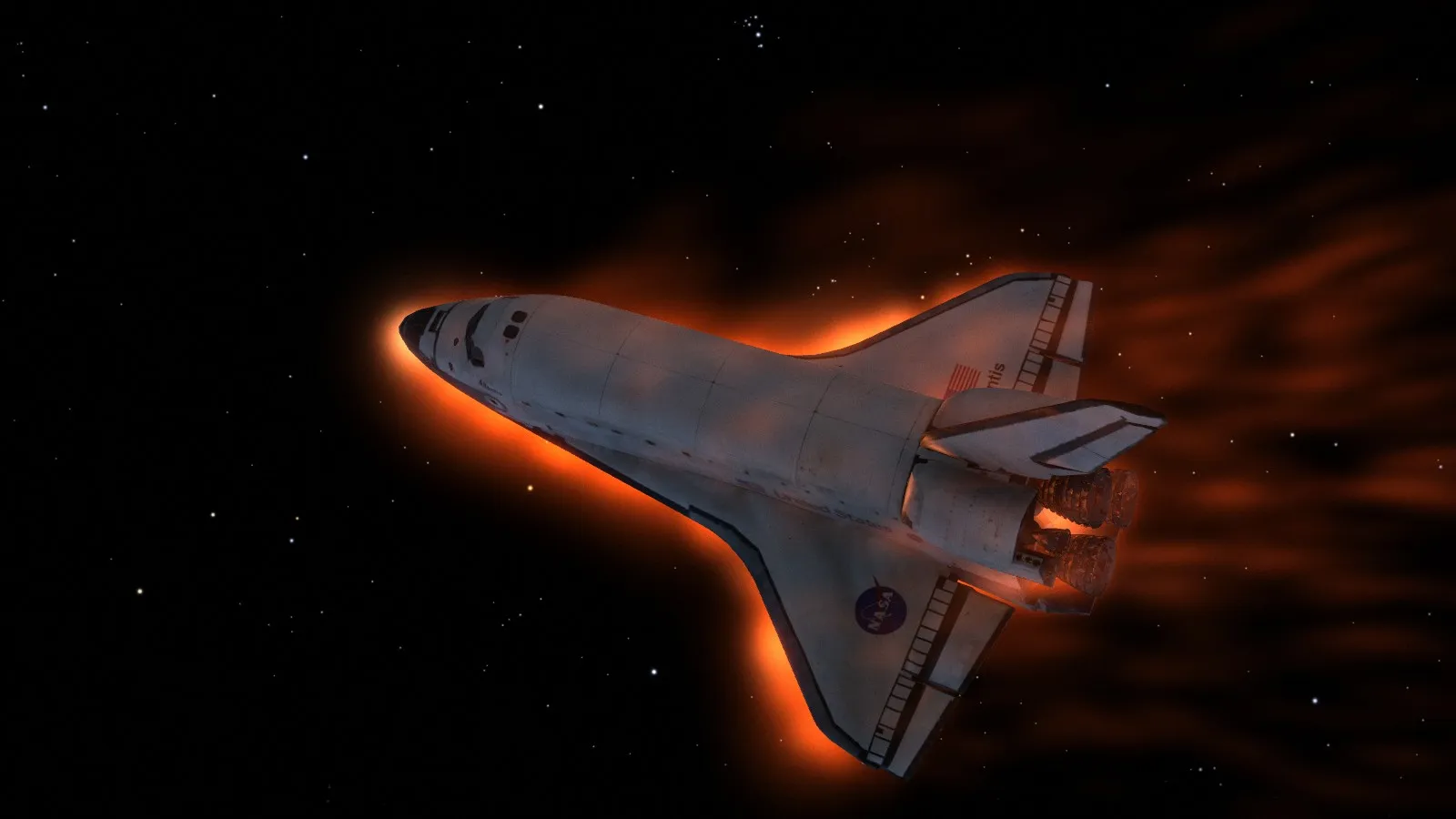
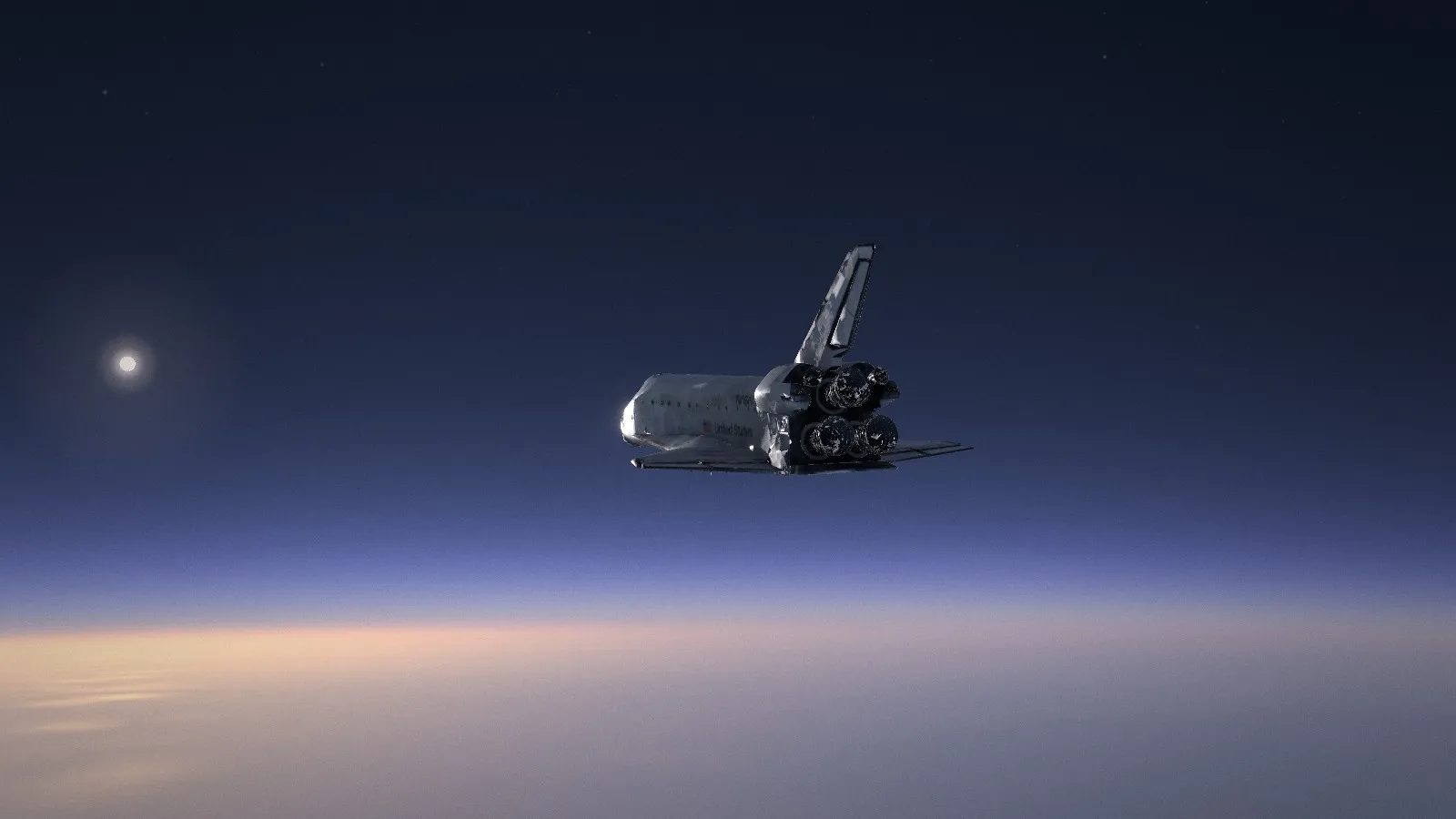
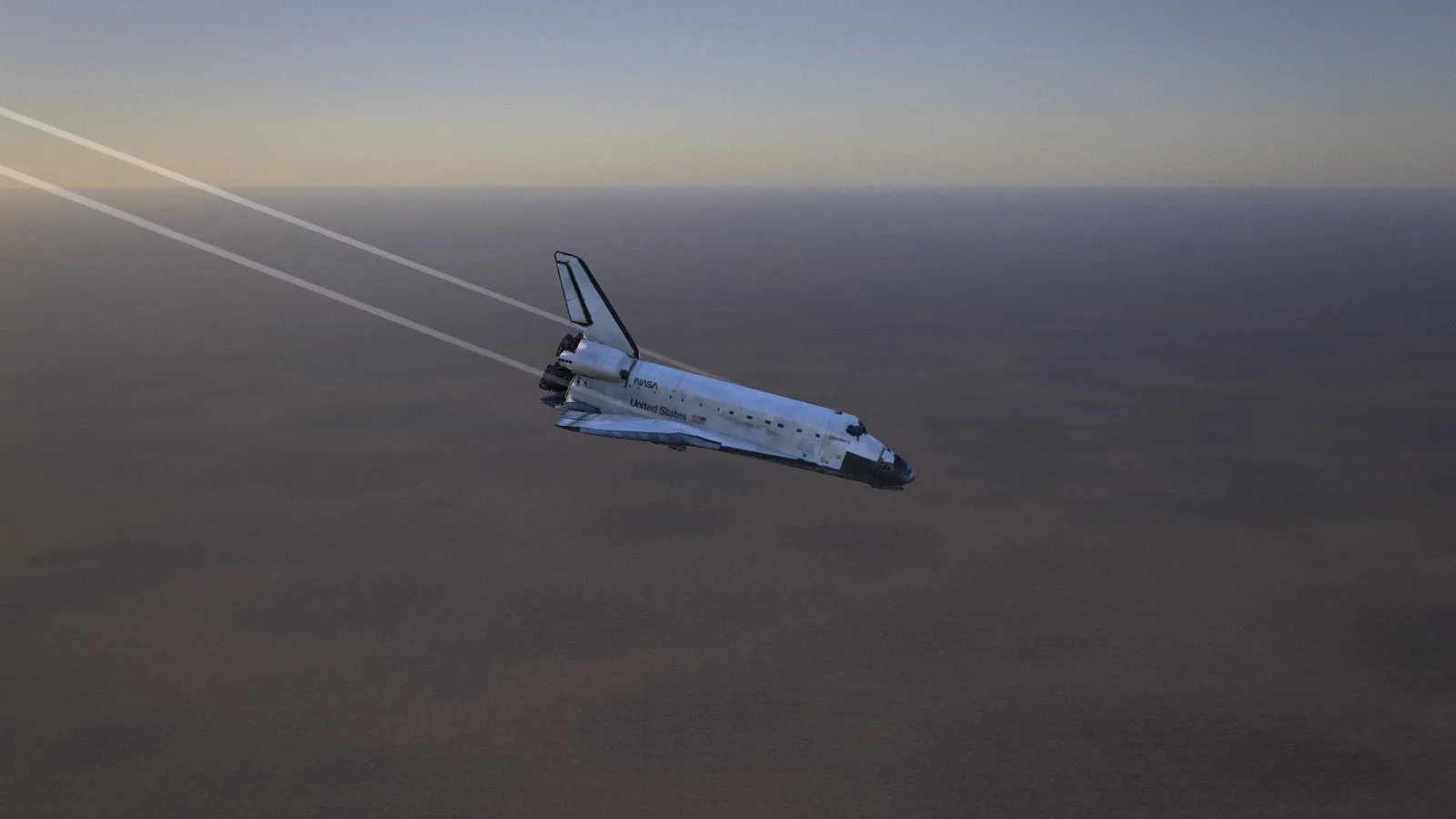
- The whole voyage. Liquid-fuelled engines light on the pad seconds before T−0 while clamps hold the rocket down; solid boosters wait for zero. Then come the ascent and staging, the parking orbit and the transfer burns, the flybys, entry and parachutes, the sky crane, powered landings, a rover drive, lunar liftoff and rendezvous, and the trip home. On Space Shuttle flights the stack rolls onto its back after clearing the tower, the boosters fall away after two minutes, and the External Tank drops back after orbit. The orbiter docks with the International Space Station or lifts the Hubble Space Telescope out of its bay with the robot arm, then glides home: through the plasma of entry, around the heading alignment cone, down the steep glideslope and onto the runway.
- The numbers behind every moment. Altitude and speeds, the g-load the crew feels, thrust, propellant left, the Δv budget of each stage, how hard each body pulls (Earth, Sun, Moon, Jupiter…), and the one-way radio delay. Each phase is also explained in a sentence or two.
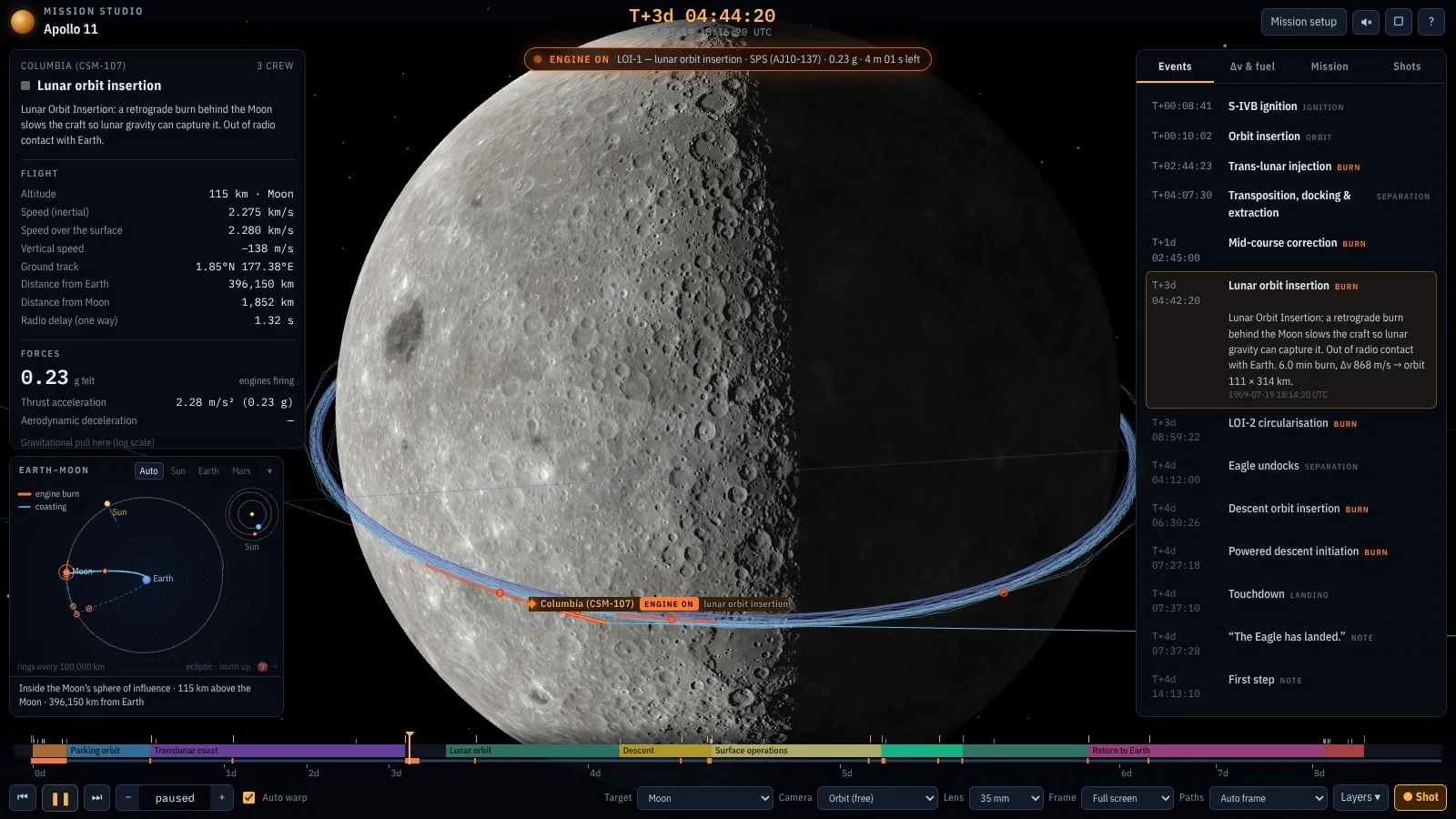
- Burns and coasting. Wherever the engines fire, the path is a thick orange ribbon; wherever the spacecraft coasts, it is a thin blue line. The 3D view, the Solar System map, and the timeline all use the same two colours.
- Sound. Turn on the speaker and you hear the flight: the engines’ roar (loudest at liftoff), air rushing past during ascent and entry, parachutes snapping open, the rover’s motors, the countdown, separations, and touchdowns, with an ambient score underneath. Everything is synthesised live in your browser. Tick Silent in vacuum if you want space to stay as silent as it really is.
- A camera crew. An auto-follow director picks the shots for you, or you can take the orbit, chase, look-at, ground, or top-down camera yourself, with lenses from 12 to 3200 mm and 2.39:1 or 1.85:1 frame guides. The Shot button saves a frame with a slate (mission time, camera, lens, telemetry) to a shot list that you can view as a contact sheet or copy as text. Turn on Film look under Layers and the picture looks as if it were shot on film: bright light blooms, the brightest parts roll off instead of clipping to white, and fine grain moves over the frame.
Spacecraft and worlds
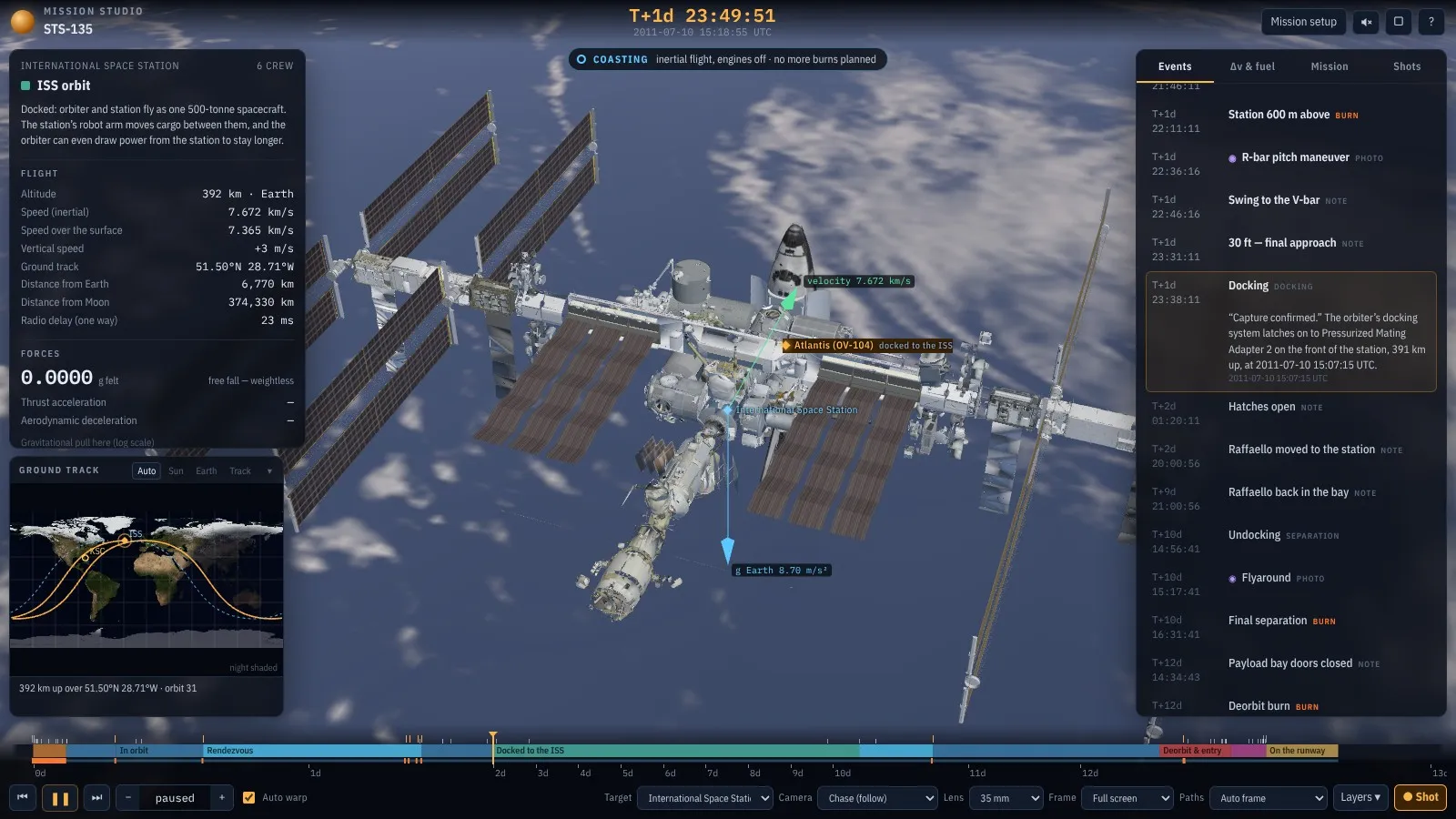
The spacecraft are built from real scans, NASA’s own models, and published drawings. The Space Shuttle orbiter is the Smithsonian’s 3D scan of Discovery, with its real tiles, blankets, and weathering. It is repainted for each flight as Columbia, Discovery, or Atlantis flew it, and the windows the scan had left open have glass. The International Space Station is NASA’s own model, set back to July 2011, when Atlantis came to it on the last Shuttle flight. Apollo’s lunar module and Perseverance are NASA’s models too. The Saturn V and the Shuttle’s External Tank and boosters are built from models shared under CC BY and fitted to their published sizes, the Saturn V stage by stage. The rest are drawn in code from published dimensions and photographs, among them the Apollo command and service modules, Hubble as it was launched in 1990, Mars 2020’s cruise stage, aeroshell, and sky crane, Atlas-Agena and Mariner 4, Chang’e 5, Tianwen-1 and Zhurong, Europa Clipper, and each mission’s launch pad as it stood on the day.
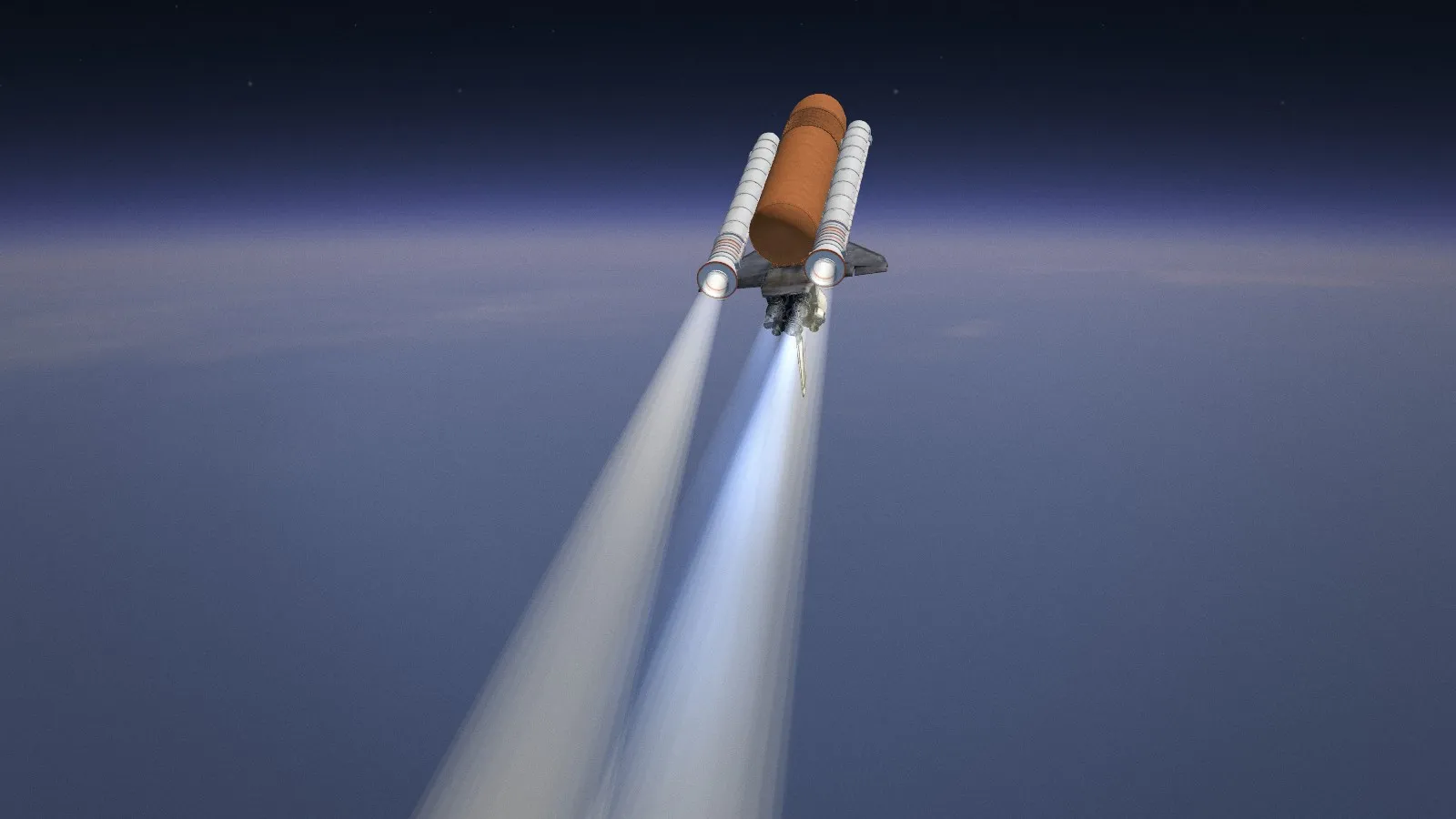
Their parts move as the real ones did. The swing arms of Apollo’s launch tower pull away at their real times. The Shuttle’s payload bay doors open in orbit, and on STS-31 the robot arm lifts Hubble out of the bay while its solar arrays unroll. Perseverance’s wheels unfold as the sky crane lowers it on its bridles. On the Moon, Chang’e 5 drills, scoops its sample into the ascender, and unfurls its flag before the ascender lifts off; on Mars, Zhurong unfolds and drives down its ramp.
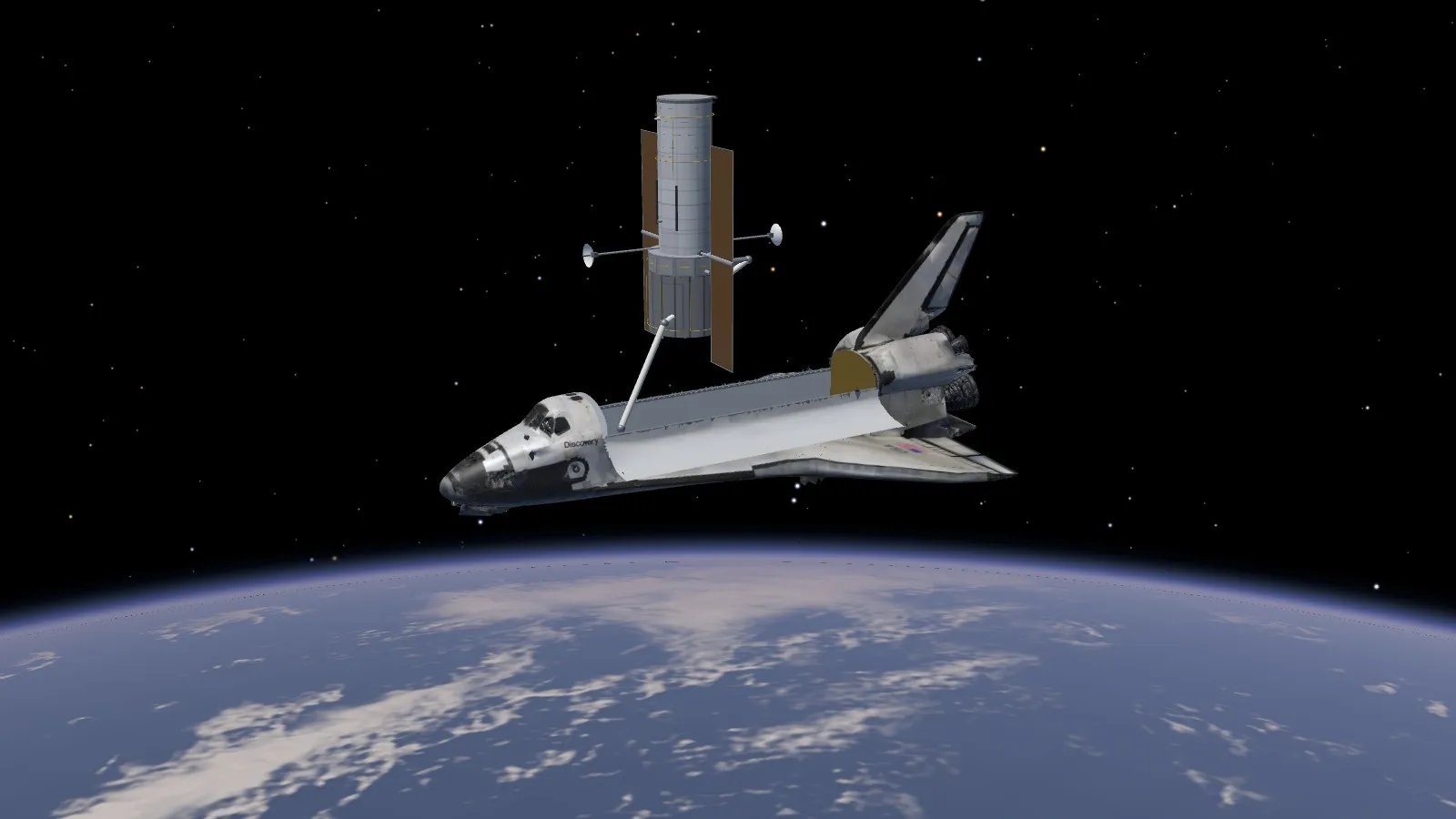
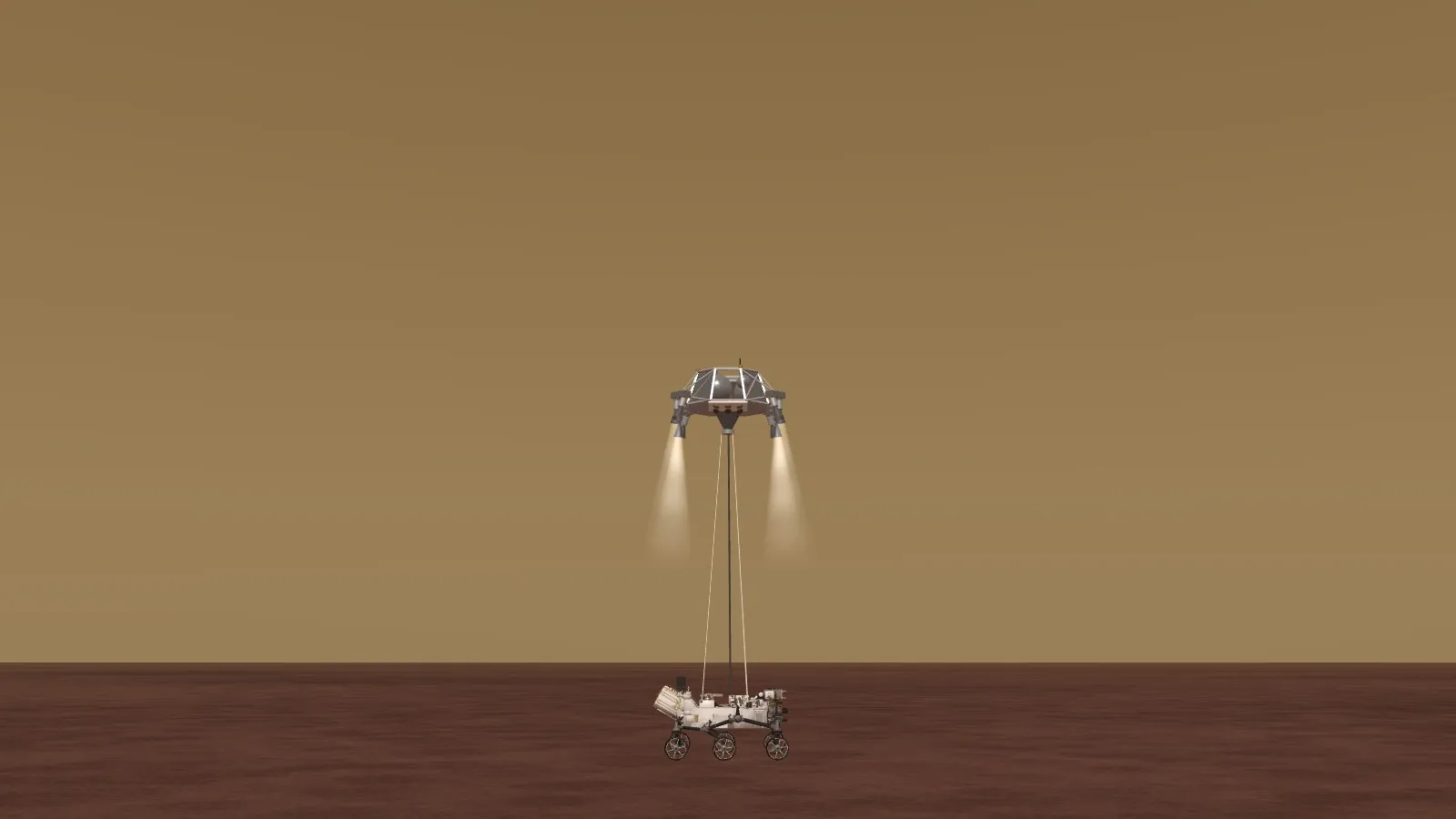
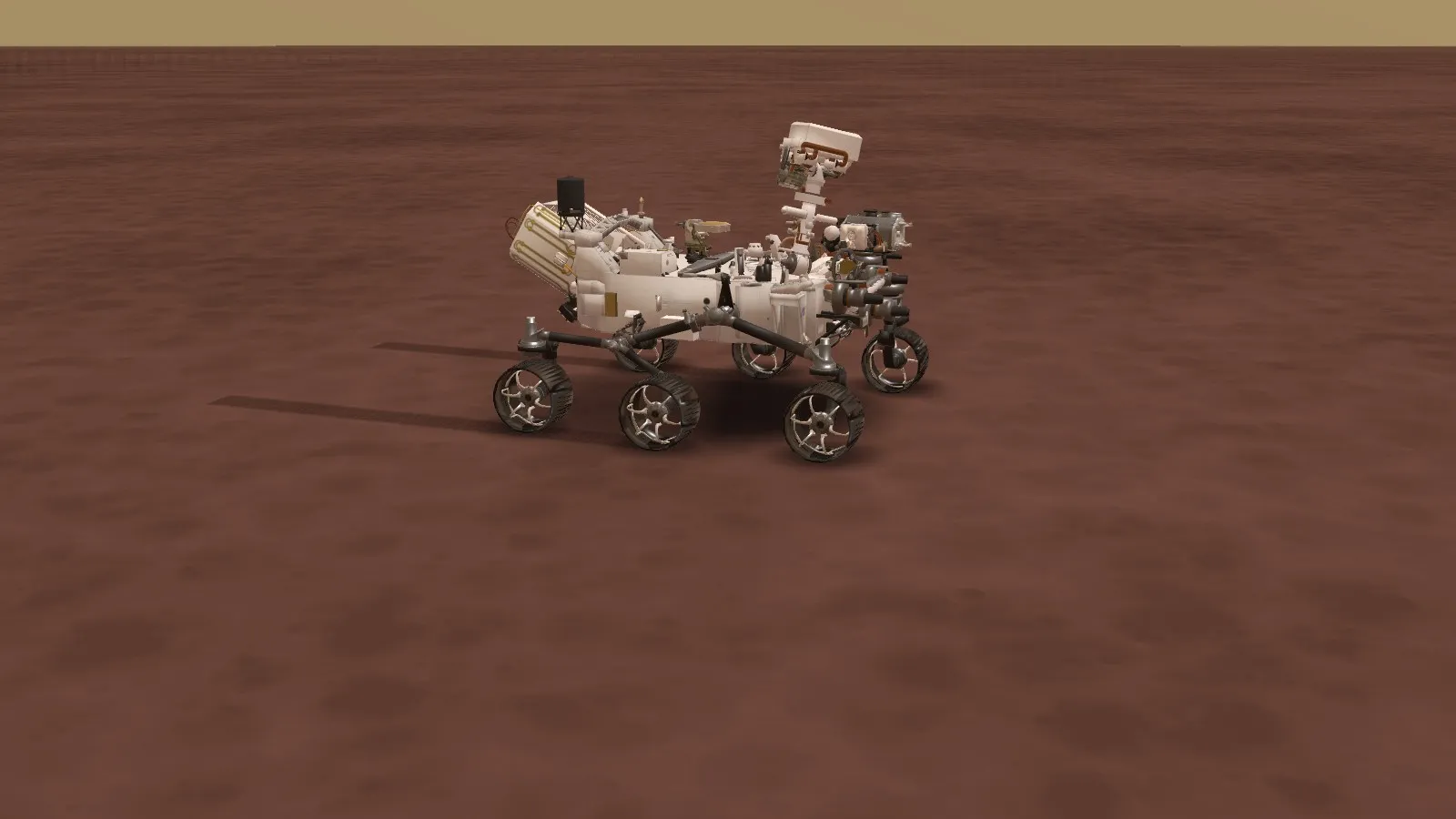
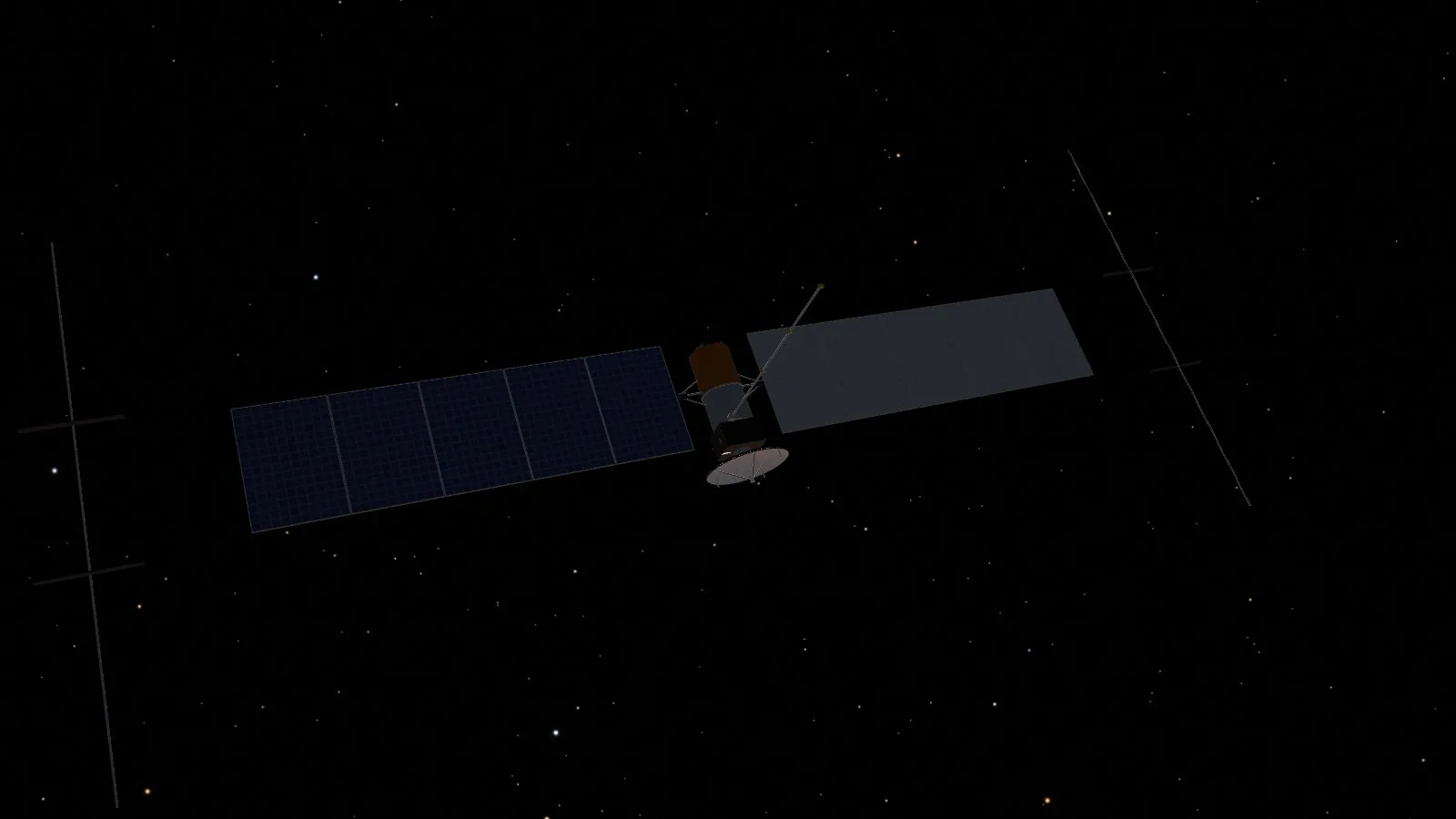
Earth, the Moon, and Mars are drawn from real maps. Earth is the Blue Marble, with the relief of the land and the sea floor and the Black Marble’s city lights at night; the Moon is the Lunar Reconnaissance Orbiter’s colour and relief; Mars has Mars Global Surveyor’s relief under a colour map from Solar System Scope. The air of Earth and Mars follows a physical model of how light scatters, and that one model gives the sky seen from the ground, the glowing limb seen from orbit, the haze over distant ground, the Sun reddening as it sets, and the butterscotch sky of Mars. At liftoff the exhaust bursts out of the flame trench as a jet of fire that rolls into billowing clouds of smoke and steam, lit orange from inside while the engines are near; the launch then leaves a trail of smoke that drifts on the wind and is lit by sunlight coming through the air. On entry, what glows is the shock layer in front of the faces that meet the flow, and on the glide home the wingtips spin threads of condensation out of the moist air near the ground.
Missions
There are 16 presets. STS-1, STS-31, and STS-135 fly the Space Shuttle: its first flight in 1981, the Hubble Space Telescope deploy in 1990, and the last flight in 2011, which docked with the International Space Station. Apollo 8, 11, and 13, Artemis II, Chang’e 5, Mariner 4, Mars 2020 Perseverance, and Tianwen-1 with Zhurong have flown, and Europa Clipper is on its way to Jupiter. Mars Sample Return, a crewed Starship landing, a crewed Mars orbit mission, and Inspiration Mars are plans and concepts that follow their published architectures. Before you fly, you can change the launch vehicle, the launch date and site, the parking orbit, the flight times, the lunar orbit altitude, the landing site, and how long to stay on the surface. For the Shuttle you can change the orbit, the payload in the bay, the OMS propellant, the landing runway, and whether to use the drag chute.
How accurate is it
It is a tool for storyboards and teaching, not for mission design. Because the trajectories are solved again from the mission inputs, the times of events come out close to the real missions but not identical. Apollo 11 touches down about 103 hours 37 minutes after liftoff, for example, against 102 hours 45 minutes in reality. The Shuttle lands within a few minutes of the real landings: STS-1 about a minute late, STS-135 under two minutes late, and STS-31 five and a half minutes early. Perseverance’s first drive follows the real one on 4 March 2021; the drives after it are illustrative.
Getting started
Pick a mission on the setup screen and press Fly this mission; tick Sound beside it to hear the launch. A ten-second countdown starts on the pad, and Skip countdown jumps straight to liftoff. Drag to orbit the camera and scroll to zoom. The buttons at the bottom left step between events and change the time warp; with Auto warp on, time slows down by itself for burns and landings.
Credits
The Saturn V is based on “Saturn V” by BoldlyBuilding, and the Shuttle’s External Tank and boosters on “Space Shuttle Atlantis” by paburoviii, both under CC BY 4.0. Earth’s clouds and the colour of Mars are from Solar System Scope (CC BY 4.0). The full list of sources is in the repository’s README.